
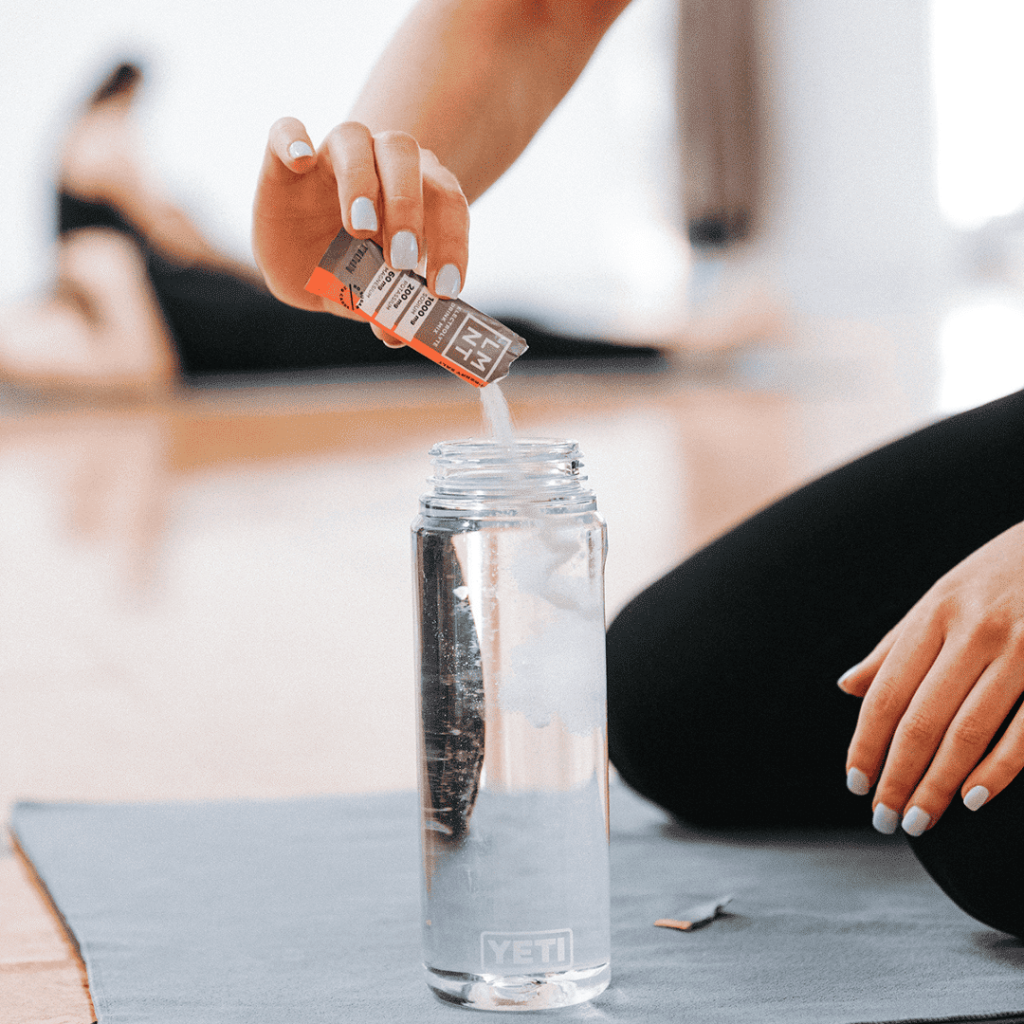
Introduction: The Underrated Science of Hydration
Water is essential for life, comprising roughly 60% of the human body and playing a critical role in virtually every biological process, from nutrient transport and temperature regulation to joint lubrication and waste removal. Yet, for anyone pushing the boundaries of physical performance or seeking peak cognitive function, simply “drinking enough water” is an oversimplification.
Advanced hydration is a nuanced science that requires understanding the balance of water with dissolved particles, particularly electrolytes, and the concept of osmolality. Dehydration, even at seemingly minor levels (a 1-2% loss of body weight), can impair strength, endurance, focus, and thermoregulation. This article moves beyond basic water intake advice, delving into the critical role of electrolytes, the importance of fluid tonicity, and practical strategies for optimizing hydration for peak performance.
2. The Role of Electrolytes: Cellular Signaling and Fluid Balance
Electrolytes are minerals that carry an electrical charge when dissolved in water. They are absolutely critical because they govern the electrical signals necessary for nerve impulses and muscle contractions, and they are the main drivers of fluid balance inside and outside our cells.
Key Electrolytes and Their Functions
- Sodium ($\text{Na}^+$): Arguably the most crucial electrolyte for endurance. Sodium maintains fluid volume outside the cells, which is essential for blood plasma volume and regulating blood pressure. Losing too much sodium (hyponatremia) is a serious concern, especially during prolonged exercise with heavy sweating.
- Potassium ($\text{K}^+$): The main electrolyte inside the cells. Potassium is vital for nerve signaling, heart function, and promoting muscle contraction. It works in opposition to sodium to maintain the cellular membrane potential.
- Chloride ($\text{Cl}^-$): Works closely with sodium to maintain fluid balance and is a critical component of digestive juices.
- Magnesium ($\text{Mg}^{2+}$): Involved in hundreds of enzymatic reactions, including energy production (ATP synthesis), muscle relaxation, and nerve conduction.
- Calcium ($\text{Ca}^{2+}$): Essential for strong bones and, critically, for triggering muscle contraction and relaxing blood vessels.
During exercise, we lose electrolytes primarily through sweat, which is hypotonic (contains fewer dissolved solutes than plasma) but contains significant concentrations of sodium and chloride. Replacing water alone dilutes the remaining electrolytes, potentially worsening performance and leading to cramps.
Section Summary: Electrolytes—particularly Sodium, Potassium, and Magnesium—are charged minerals essential for nerve signaling, muscle contraction, and maintaining proper fluid volume across cell membranes. Replacing them is non-negotiable for prolonged or intense activity.
3. Understanding Osmolality and Fluid Absorption
To optimize fluid replacement, one must understand osmolality, which refers to the concentration of dissolved particles (solutes like glucose and electrolytes) in a fluid. This concentration dictates how quickly and efficiently the fluid is absorbed from the digestive tract into the bloodstream.
Sports drinks are categorized based on their osmolality relative to the human body’s blood plasma (which has an osmolality of approximately $280-290\ \text{mOsm}/\text{kg}$):
- Isotonic Solutions: These have an osmolality similar to plasma. They are absorbed quickly and provide a good balance of fluid, carbohydrates, and electrolytes. Best for: Maintaining hydration and providing energy during prolonged high-intensity exercise.
- Hypotonic Solutions: These have a lower solute concentration than plasma. They are absorbed very rapidly because the body needs minimal effort to move them into the bloodstream. They are highly effective for fluid replacement but provide less energy. Best for: Rapid rehydration when energy stores are already sufficient, or during lower-intensity activity.
- Hypertonic Solutions: These have a higher solute concentration than plasma. They are absorbed slowly and, if taken in excess, can actually draw fluid into the gut, potentially causing dehydration or stomach distress. They are primarily used for carb-loading post-exercise to replace glycogen. Best for: Post-exercise recovery, primarily for carbohydrate and calorie replacement.
The ideal strategy depends entirely on the duration and intensity of the activity. For general hydration, a hypotonic solution is often superior; for sustained performance, an isotonic solution provides the optimal fluid and fuel balance.
Section Summary: Osmolality—the concentration of solutes in a drink—dictates its absorption rate. Isotonic drinks (similar concentration to blood) are best for balancing fuel and fluid during exercise, while hypotonic drinks (lower concentration) are optimized for rapid rehydration.
4. Sweat Rate Testing and Personalized Sodium Needs
Generic hydration advice fails when individuals have highly variable sweat rates and sodium losses. Personalizing a hydration strategy requires self-assessment.
Determining Sweat Rate
A simple and accurate method for determining sweat rate involves pre- and post-exercise weighing:
- Weigh In: Weigh yourself (with minimal or no clothing) before a known duration of exercise (e.g., 60 minutes).
- Record Intake: Track the exact amount of fluid consumed during the exercise.
- Weigh Out: Weigh yourself immediately after the exercise, after towel-drying.
- Calculate:
$$\text{Sweat Rate} = \frac{\text{Pre-Exercise Weight} – \text{Post-Exercise Weight} + \text{Fluid Consumed}}{\text{Duration (in hours)}}$$
Note: 1 kg of weight loss equals 1 liter of fluid loss.
Knowing this rate allows an athlete to aim to replace $80-90\%$ of fluid losses hourly, preventing excessive dehydration.
High-Sodium Sweaters
Some individuals are “salty sweaters,” losing significantly more sodium than others (visible as white streaks on clothing or skin). While the average sodium concentration in sweat is about 1,000 mg per liter, some individuals can lose up to 2,000 mg per liter. These individuals require hydration solutions with much higher sodium concentrations ($1,000\ \text{mg}/\text{L}$ or more) to prevent muscle cramps and hyponatremia.
Section Summary: Personalized hydration begins with calculating the individual sweat rate using pre- and post-exercise weighing. Recognizing high-sodium sweaters is critical, as they require specialized, higher-concentration sodium solutions to prevent performance decline and health risks.
5. Hydration and Cognitive Function
The impact of dehydration extends well beyond physical performance to affect the brain. Even a mild deficit of $2\%$ can lead to a measurable decline in cognitive metrics:
- Reduced Focus: Attention span and vigilance drop significantly.
- Impaired Motor Skills: Reaction time slows down, and complex motor skills degrade.
- Mood Alterations: Increased irritability, fatigue, and lower perceived motivation.
The central mechanism appears to be the thickening of the blood (hemoconcentration) due to plasma volume loss, which reduces blood flow and oxygen delivery to the brain. Maintaining a hyper-hydrated state before key tasks or competitions can therefore serve as a powerful cognitive enhancer.
6. The Research Landscape
Current sports science emphasizes a shift from generalized fluid intake recommendations to highly individualized, precise electrolyte-guided protocols. The focus is on maintaining blood plasma volume and cellular osmolarity to ensure that performance is sustained over hours, not just minutes.
Research into muscle wasting conditions and performance enhancement continues to be an area of significant scientific interest globally. In parallel with studies on factors like protein synthesis, specific compounds such as Selective Androgen Receptor Modulators (SARMs) are also subject to ongoing investigation by researchers in laboratory and clinical settings. These studies typically focus on understanding the pharmacological mechanisms and potential therapeutic applications of these compounds for issues like age-related muscle loss and cachexia.
For a comprehensive understanding of SARMs and their research properties, explore this official LabSarms Research Guide.
7. Conclusion
Advanced hydration is a scientific discipline that demands attention to detail. It is not about chugging water, but rather about strategically balancing water intake with the essential electrolytes that regulate cellular function, nerve conduction, and fluid absorption. By understanding osmolality, testing individual sweat rates, and ensuring adequate sodium replacement, athletes and health-conscious individuals can move past basic thirst cues to unlock sustained physical and cognitive performance. Optimal hydration is the foundation upon which peak physical output is built.
